
March 6, 2026
While we were in California, we spent a great deal of time in various museums and botanical gardens. “The Huntington is a world-renowned cultural and educational institution, that provides transformative experiences for a community of the curious”, states their website. “It was founded in 1919 by Henry E. and Arabella Huntington, it supports research and promotes public engagement through its expansive library, art, and botanical collections.” The Chinese and Japanese gardens were outstanding. We were fortunate to have time to also view their art collections. This particular piece grabbed our attention.
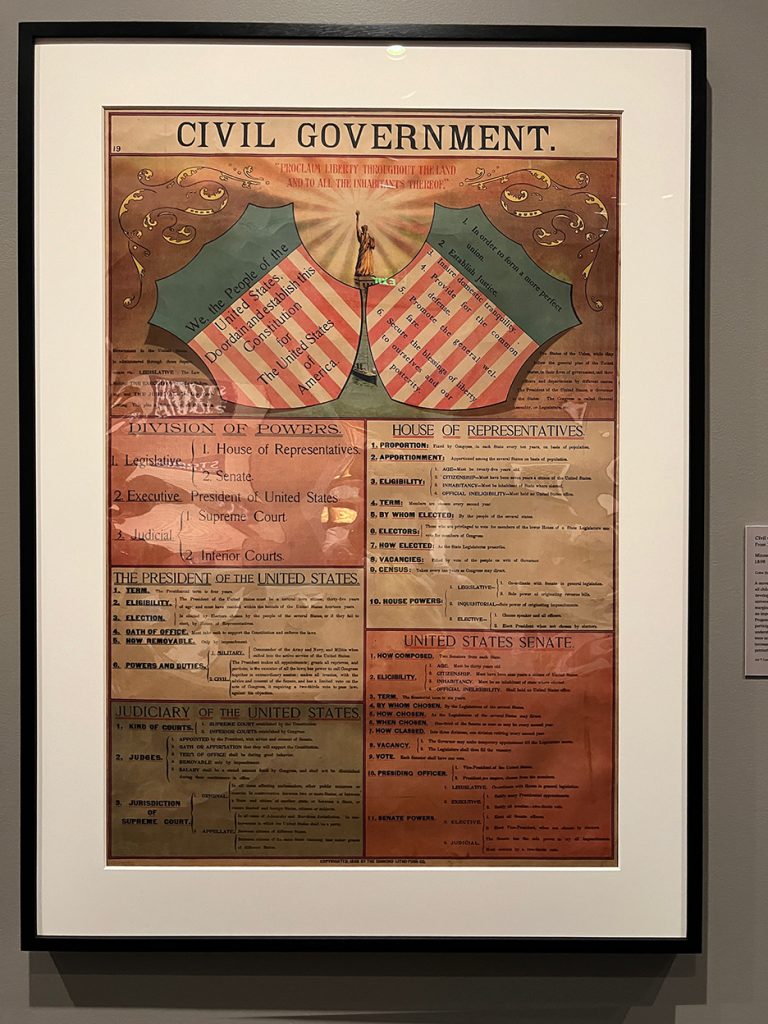
Division of Powers:
1. Legislative – 1. House of Representatives. 2. Senate
2. Executive- 1. The President of the US.
3. Judicial-1. Supreme Court 2. Interior Courts.
Each box clearly defines the structure of the United States democracy.
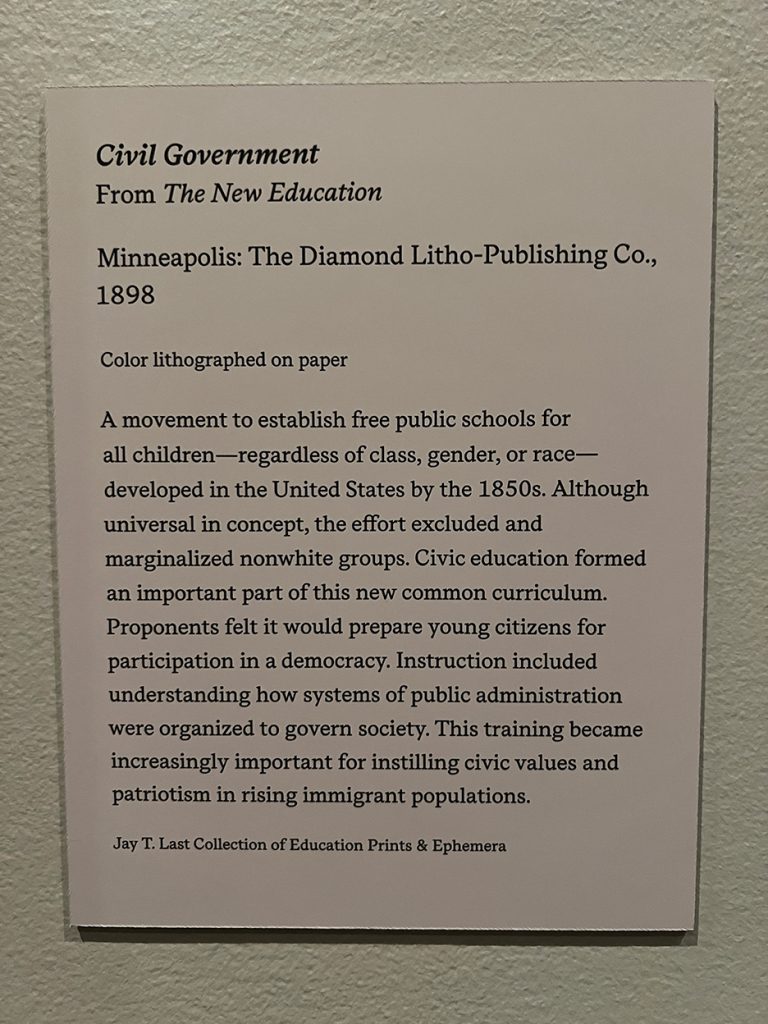
Civil Government
From The New Education
Minneapolis: The Diamond Litho-Publishing Co.,
1898
Color lithographed on paper
A movement to establish free public schools for all children —regardless of class, gender, or race—developed in the United States by the 1850s. Although universal in concept, the effort excluded and marginalized nonwhite groups. Civic education formed an important part of this new common curriculum.
Proponents felt it would prepare young citizens for participation in a democracy. Instruction included understanding how systems of public administration were organized to govern society. This training became increasingly important for instilling civic values and patriotism in rising immigrant populations.
Jay T. Last Collection of Education Prints & Ephemera
These daily studio notes lead toward my 2026 solo exhibitions in New York City and Poughkeepsie, NY.
Comments
March 6, 2026 — No Comments
HTML tags allowed in your comment: <a href="" title=""> <abbr title=""> <acronym title=""> <b> <blockquote cite=""> <cite> <code> <del datetime=""> <em> <i> <q cite=""> <s> <strike> <strong>